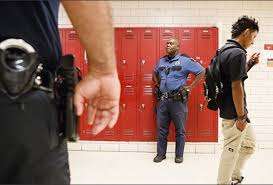
Before a child is arrested, booked, or sees the interior of a juvenile detention facility, they are nearly usually familiar with another institution: their school. And if they have a disability, the system has most certainly already started the process of driving them out.
This is the special education to jail pipeline. This is not a metaphor. It is a proven, measured, decades-long pattern that scholars, advocates, and formerly incarcerated disabled people have been pointing out for years, but politicians have mostly ignored it. And the current administration’s attack on the Department of Education and special education funding is exacerbating the problem.
The numbers
A widely referenced research on the school-to-prison pipeline states that 85% of incarcerated youths have learning and/or emotional disabilities. These children drop out of school at a far higher rate and are significantly more likely to be incarcerated than their non-disabled classmates.
Lauren Shallish of Rutgers-Newark’s Department of Urban Education estimates that at least one out of every three youths arrested in the United States has a disability.
Students with disabilities are more vulnerable to school exclusion due to stigma and poor accommodations, and as a result, they are overrepresented in the school-to-prison pipeline, leading to what experts now refer to as the special-education-to-prison pipeline.
These figures have been reported for decades. They have not much improved. And they are not evenly distributed across the disabled student population. Black disabled students are at the intersection of two systems that have traditionally collaborated to remove, punish, and confine: the racialized disciplinary apparatus of public schools and the racialized criminal legal system.
Disability classifications in schools disproportionately affect Black and brown students. The designation can hinder their academic performance and lead to interactions with the juvenile criminal system. This implies that a system created to identify and help kids with disabilities is being utilized, whether purposefully or unintentionally, to sort children by race and direct them to jail.
How the pipeline works
The mechanics are well documented. A disabled student demonstrates disability-related behaviors such as stimming, emotional dysregulation, trouble following directions, and impulsive responses to stress. Instead of getting disability-informed help, they have are suspended. Suspended again. Expelled. A school resource officer referred the incident to police enforcement. Arrested at school. Placed in juvenile detention.
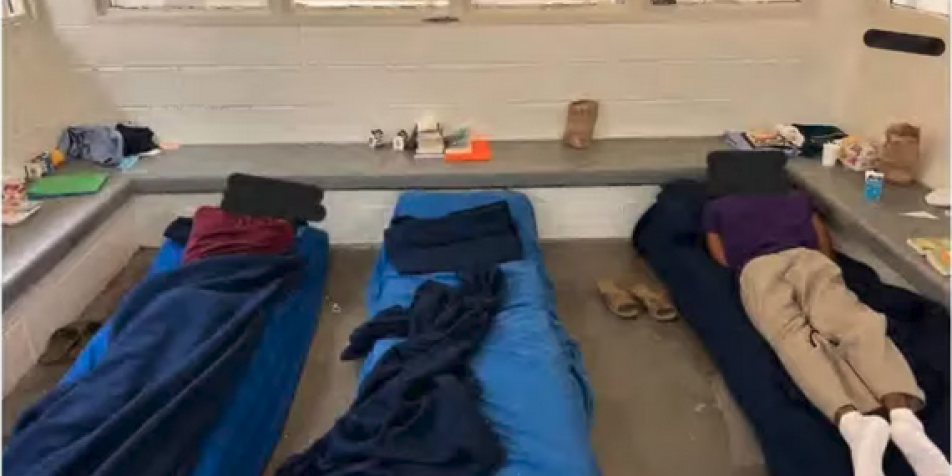
Inside juvenile jail, youths with disabilities are often denied the special education services to which they are legally entitled under the Individuals with Disabilities Education Act. IDEA requires that every disabled student receives a free, suitable public education. It continues to apply even after a student is incarcerated. However, enforcement in juvenile prisons has been so weak that Delaware was recently sued over it.
Delaware settled a federal lawsuit in February 2026 for failing to provide special education programs to juvenile offenders. The settlement mandates the state to offer IDEA-compliant education to all detained youngsters. This shouldn’t have necessitated a lawsuit. It took a lawsuit since the carceral system’s default premise is that disabled children have no rights.
The UK connection
This isn’t just a US story. A June 2025 study from the University of Exeter discovered that children with special educational needs in the UK are more likely to be excluded from school, which has a clear relationship to early criminal convictions. The pipeline runs across the Atlantic, and the mechanics are similar: disability causes behavior that schools classify as misbehavior, misconduct leads to exclusion, and exclusion creates the conditions for criminalization.
What the Trump administration is doing to make this worse
Project 2025 seeks to block Title I grants to under- resourced schools so that funds can be distributed evenly to all schools, regardless of need, resulting in reduced federal financing for schools serving disadvantaged populations. This drop in funding may force schools to remove special education services in order to save money, which is especially harmful to the most marginalized students: Black disabled students.
The current administration is systematically dismantling the Department of Education, which is responsible for IDEA compliance. Without federal enforcement, the statute designed to ensure disabled students access to appropriate education becomes unenforceable. Without Title I funding, schools serving the most marginalized students lose the resources that enable special education.
What disability justice demands
According to Lauren Shallish of Rutgers-Newark, the vast majority of prisoners identify as disabled or become impaired as a result of incarceration. However, the role of disability receives less attention since it is disguised as clinical judgment, which many people assume to be correct but can be very subjective.
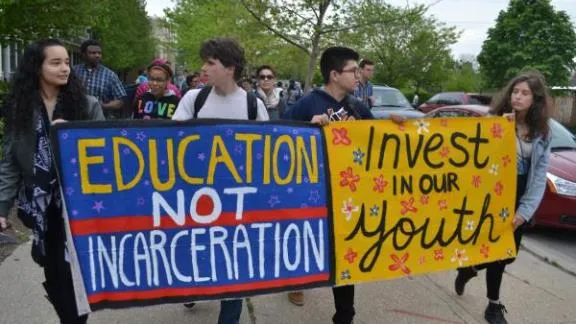
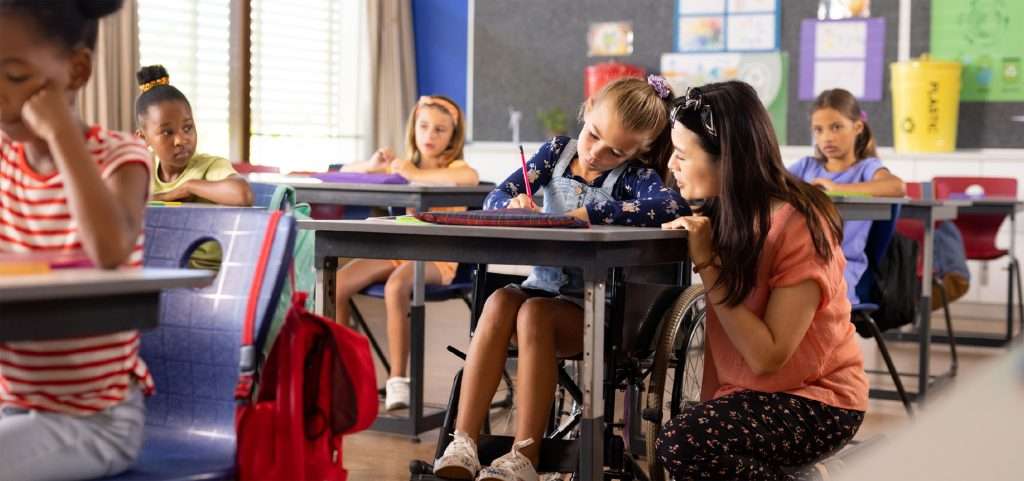
The disability justice demand is clear. Disabled students deserve to be supported, not punished. When a student’s condition causes behavior that a school considers misbehavior, the institution has failed, not the student. Suspension, expulsion, and police involvement are not considered disability accommodations. They are the pipeline.
CripJustice exposes systems that cause disability and then punishes those for it. The special education-to-prison pipeline is one of these systems. It starts before a child is ever arrested. It starts in the school, when a disabled kid is informed that their body and brain are a problem to be solved rather than a life to be lived. Too many of them wind up behind a locked door.
The Delaware settlement represents a legal victory. It needed a lawsuit to get it. That is the status of enforcement. That is what disabled children in our country are entitled, and it is necessary to collect.
Sources
Rutgers Experts Put Spotlight on Special Ed to Prison Pipeline — Rutgers-Newark/Patch, November 2023
School-to-Prison Pipeline — ACLU
Disability Rights Laws Extend to Prisons — The Progressive, January 2026