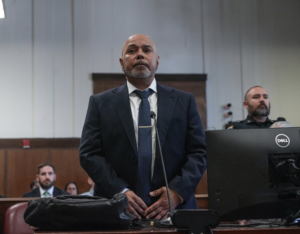
In the United States, police killed at least 1,314 people in 2025. The most recent data from Campaign Zero states that this figure is the first yearly decrease in police killings since 2019. It was regarded as cautiously good news. A third to half of all Americans killed by law enforcement have a disability, a fact that has been consistent for decades but was not mentioned in the majority of coverage of that figure.
It’s not a footnote. That’s the story.
The Numbers
In 2025, police particularly responded to reports of someone behaving erratically or experiencing a mental health crisis, which resulted in at least 116 deaths. Researchers point out that different crisis response strategies might drastically lower that number. In 2025, symptoms of mental illness were present in almost one in five police killings. 24% of people killed by police were Black Americans, who make up 12% of the US population. The danger increases most sharply at the intersection of Blackness and disability. When a neighbor calls about someone acting erratically, when a family calls for help during a mental health crisis, or when a wellness check is sent out, the person who answers is almost always armed.
According to the Ruderman Family Foundation, which conducted the most comprehensive analysis of media coverage of police brutality and disability, the majority of those murdered in use-of-force incidents that attract public attention are disabled. This relates to both situations that are declared illegal and those in which officers are ultimately found not guilty. The media either ignores the disability component of these stories or, worse, presents them in a way that exacerbates ableism and stigma. The structural circumstances that led to the killing remain unmentioned when a victim’s disability is ignored or when a mental illness is blamed for the victim’s death.
The pattern CripJustice has documented
Over the course of this internship, I have written Stolen Lives gallery entries for dozens of people killed by law enforcement, correctional officials, and prison personnel. The pattern is not random; it is consistent.
Families call for help. Police arrive. A person with a mental health condition, intellectual disability, autism, a traumatic brain injury, schizophrenia, bipolar disorder, or PTSD. Officers deploy lethal force. No one is charged.
In 2019, Osaze Osagie, 29, was shot in State College, Pennsylvania, after his father called the police to help him get to a hospital under a mental health warrant. In 2019, 32-year-old Kawaski Trawick was shot in his Bronx apartment after calling 911 to get help getting inside his apartment. Despite neighbors’ repeated warnings that Asheed Vassell, 34, had bipolar disorder, he was shot in Brooklyn in 2018 while carrying a metal pipe that police mistook for a gun. Katelyn Hall, 28, was shot in Louisville in March 2026 after her roommate called 911 because she had harmed herself, despite Louisville having a non-police mental health response program that was not deployed. Keith Lamont Scott, 43, was shot in Charlotte in 2016 after his wife told officers he had a traumatic brain injury, which officers did not ask about or account for.
In every case, someone had called for help. In every case, a person with a documented disability died. In every case, no officer was charged,
In September 2024, the Inter-American Commission on Human Rights stated that these incidents are part of a broader trend of police using excessive force against individuals with psychosocial disabilities, especially those of African descent and other marginalized racial and ethnic groups. The IACHR urged the US to establish alternative non-police mental health response programs, mandate crisis intervention training, and gather comprehensive data on disability in police killings. These recommendations are not legally binding. None of these have been put into practice on a national level.
The corrections and detention piece
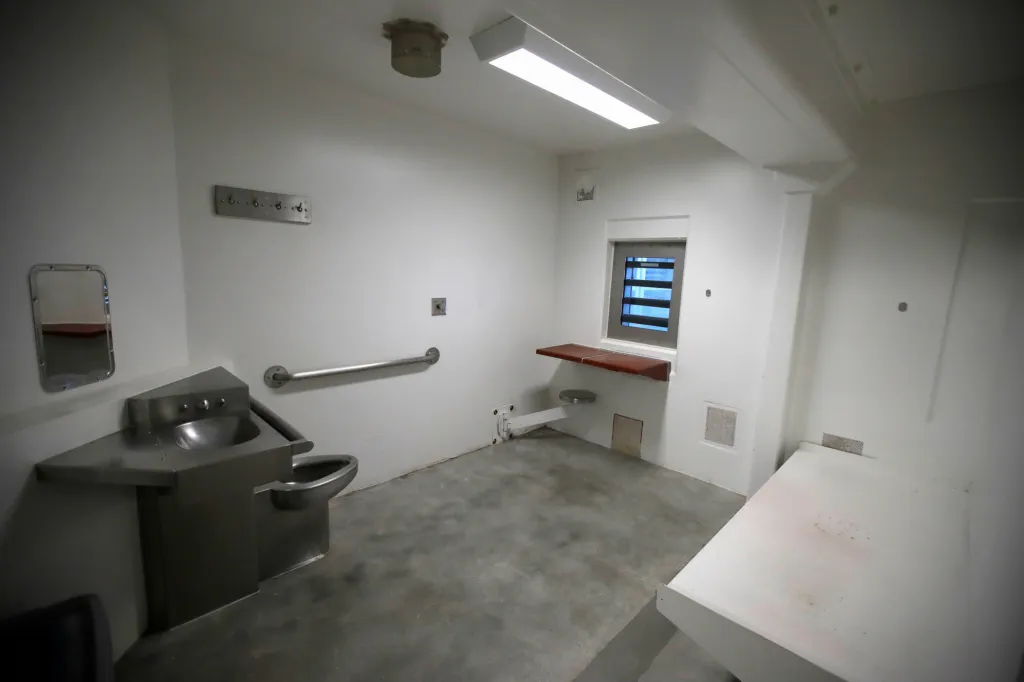
The killing of disabled people by law enforcement does not stop at the point of arrest.. It carries on inside.
At a Virginia prison built specifically to accommodate people with disabilities, 52-year-old intellectually challenged Charles Givens was reportedly beaten to death by jail personnel. Blunt force trauma was discovered after an autopsy. The officers were found not liable by a civil jury.
Layleen Polanco, a 27-year-old Black transgender person with epilepsy, died alone by herself in solitary confinement at Rikers Island in 2019 when guards failed to check on her during a seizure. In 2023, three hospital staff members and seven sheriff’s officers in Virginia smothered 28-year-old Irvo Otieno while he was being transferred to a mental health facility. The whole thing was caught on camera.

The pattern is the same in ICE detention. Three days prior to his death at Moshannon Valley Processing Center, Fouad Saeed Abdulkadir, an imam suffering from heart failure, filed a federal emergency motion describing the refusal of medical attention. Because he could only speak Mandarin, Chaofeng Ge, 32, was unable to express his distress to the staff, who had him turn in written notes for translation. Five days after being admitted, he passed away in a shower stall. Nhon Ngoc Nguyen, 55, had dementia so severe that he was too disoriented to respond to questions on ICE’s own admission evaluation. Between hospitalization treatment, ICE routinely sent him back to custody. He died
The data problem
There is no legal requirement for law enforcement agencies to collect, aggregate, or report disability data in use-of-force cases. The percentages we have, which range from a third to half of all police deaths involving handicapped persons, are based on data collected by researchers and campaigners from media coverage and public records. The actual number is likely definitely greater.
According to a Columbia Law Review analysis published in December 2024, US privacy law has failed to protect disabled people of color in their homes, with the deaths of Ryan Gainer and Sonya Massey revealing systemic violations of both physical and decisional privacy that disproportionately affect disabled people of color. The authors call for an abolitionist approach to privacy law reform that explicitly addresses the intersections of race and disability.
What this requires
The Ruderman Family Foundation ended its landmark research by calling for disability to be included in every story concerning police brutality in which it appears. That is a minimum requirement, not a ceiling. Naming disability in media coverage does not end the killings. It makes the pattern apparent.
What prevents the killings is the deployment of the appropriate responders. It is sponsoring non-police crisis response programs, which could help someone in a mental health crisis without using a weapon. It will put a stop to the practice of solitary confinement for persons with mental illnesses and disabilities in jails, prisons, and detention institutions. It is mandatory crisis intervention training with real accountability when officers ignore it. It is collecting comprehensive data so that the scale of this crisis cannot be denied.
CripJustice has developed a Stolen Lives gallery to identify what is happening person by person. Each entry represents a person with a name, a family, a life that mattered, and a death generated by a system that judged their disability was a threat rather than a human condition demanding care.
The pattern isn’t random. Accountability is. The space between these two facts is where people continue to die.
Sources
Fatal police violence may have declined for the first time in years — Stateline, April 1, 2026
Media coverage of law enforcement use of force and disability — Ruderman Family Foundation, 2017
Police Brutality Statistics and Analysis — Security.org, April 2026
Half of People Killed by Police Have a Disability — NBC News, 2016
Understanding the Policing of Black, Disabled Bodies — Center for American Progress, March 2024