

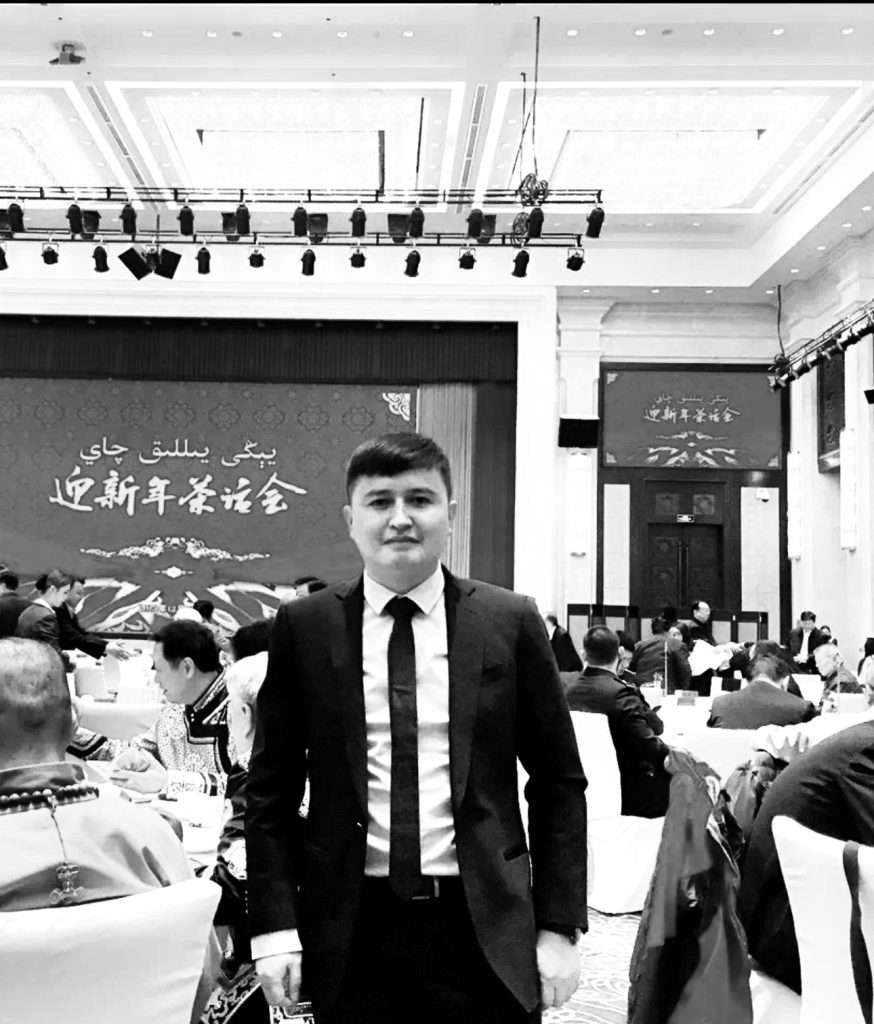
In the spring of 2016, Ekpar Asat returned to Urumqi from the United States, where he had recently completed the State Department’s International Visitor Leadership Program, one of the most distinguished foreign exchange programs offered by the US government. He was an entrepreneur, philanthropist, and the creator of Bagdax, a social networking site designed particularly for Uyghurs in China that has grown to over 100,000 subscribers. He was someone who, according to his sister Rayhan, helped disabled children finish their education and utilized technology to assist people in rural Xinjiang in filing complaints and recovering what had been wrongfully taken away.
Weeks after he landed, he disappeared.
It’s now been ten years. Ekpar Asat is still inside. He has never received a fair trial. He is serving 15 years in a prison camp in Aksu, away from his family and in conditions that are clearly destroying his health. Most people have never heard his name.
What happened
Ekpar Asat was detained in April 2016, only weeks after returning from the United States. No reason was offered to his family. He disappeared into China’s vast detention network in Xinjiang and was not heard from for years. In early 2020, the Chinese Embassy in Washington told US Senator Chris Coons that Asat was sentenced to 15 years in prison for “inciting ethnic discrimination and ethnic hatred.” There were no trial records available. It is unclear whether he received due process. He has been confined in solitary confinement at the Aksu prison camp since January 2019.
The charge against him is not incidental. The Chinese government criminalizes activities like creating a platform that gives Uyghurs a voice, connecting individuals in remote regions to resources, and using technology to preserve Uyghur language and culture. According to Uyghur activist Abduweli Ayup, people like Ekpar, who struggled to maintain Uyghur language, culture, and identity, and battled to keep the Uyghur voice alive, are precisely those the system targets.
In March 2023, the UN Working Group on Arbitrary Detention declared his arrest arbitrary and demanded his immediate and unconditional release. China hasn’t answered. He remained in Aksu.
What ten years in solitary confinement does to a body
This is where disability justice enters the story directly.
During the first video call his family was allowed in 2021, Ekpar displayed signs of malnutrition, a lack of sunlight, and inadequate healthcare. When his family was finally granted an in-person visit in mid-2025, what they saw left them, particularly his sister Rayhan, much more concerned than before that his prolonged imprisonment was causing significant and long-term damage to his physical and mental health.
US Senators Jim Risch and Chris Coons, who have long advocated for his release, stated in an April 2025 statement that years of solitary imprisonment have had a negative influence on his health. The specifics of what happened to his body are unknown since China does not allow independent monitoring. The lack of transparency itself contributes to the harm. When a state can conceal its actions against a person’s body, it can do anything it wants.
We do know that solitary confinement is not a neutral circumstance. The study on extended isolation is unambiguous. It causes long-term neurological and psychological damage, including psychosis, severe depression, cognitive decline, and post-traumatic stress. It affects sleep, immunological function, and cardiovascular health. It does not take years to do irreversible damage. Studies reveal that measurable psychological harm occurs within days. Ekpar Asat has been held in solitary confinement for years. Whatever his body looked like when he entered that prison is no longer the same. The Chinese state has created disability in him by intentional isolation and deprivation, and it has done so in a facility intended especially to hide the facts.
This is what we name it at CripJustice. Incarceration produces disability. Solitary confinement causes disability. Denial of sunshine, sustenance, medical treatment, and human contact causes a disability. And when a state does this to an entire community, as China is doing to the Uyghurs in Xinjiang, it is not considered individual abuse. It’s a system.

The broader context: one million Uyghurs and counting
Ekpar Asat’s case is not isolated. Since 2017, the Chinese government has detained over one million Uyghurs and other Muslim minorities in Xinjiang, subjecting them to surveillance, forced labor, forced sterilization, severe restrictions on religious practice, and what multiple governments and human rights organizations have described as genocide and crimes against humanity.
This has profound implications for disability justice, which are nearly entirely undiscussed. Mass incarceration on this magnitude causes widespread disability. Solitary confinement, forced labor, hunger, psychological torture, and denial of medical treatment, when applied to over a million individuals over time, causes irreversible physical and psychological trauma on a scale unmatched in contemporary history outside of active armed conflicts.
His sister has not stopped
Rayhan Asat is a human rights lawyer and Harvard Law School graduate, the first Uyghur to do so. She has spent ten years fighting for her brother’s release and has one of the most rigorous legal and advocacy records of any family member of a political prisoner in recent history. She has published in the Atlantic Council, testified before Congress, contacted the United Nations, and continued a public campaign for Ekpar’s release despite Beijing’s ten-year silence.
In a piece published by Amnesty International to commemorate the tenth anniversary of his detention, she wrote about who her brother is, not the prisoner, but the individual. People have nicknamed this football player after Roberto Baggio. He was the first to invite her to dance at weddings after she returned from studying abroad and felt out of place. The guy who, while inside the prison, assisted elderly detainees in cutting their nails since they were too weak to do it themselves. “Even in a place designed to strip people of dignity,” she said, “he was trying to restore it.”
Ten years. He shouldn’t lose another day.
What you can do right now
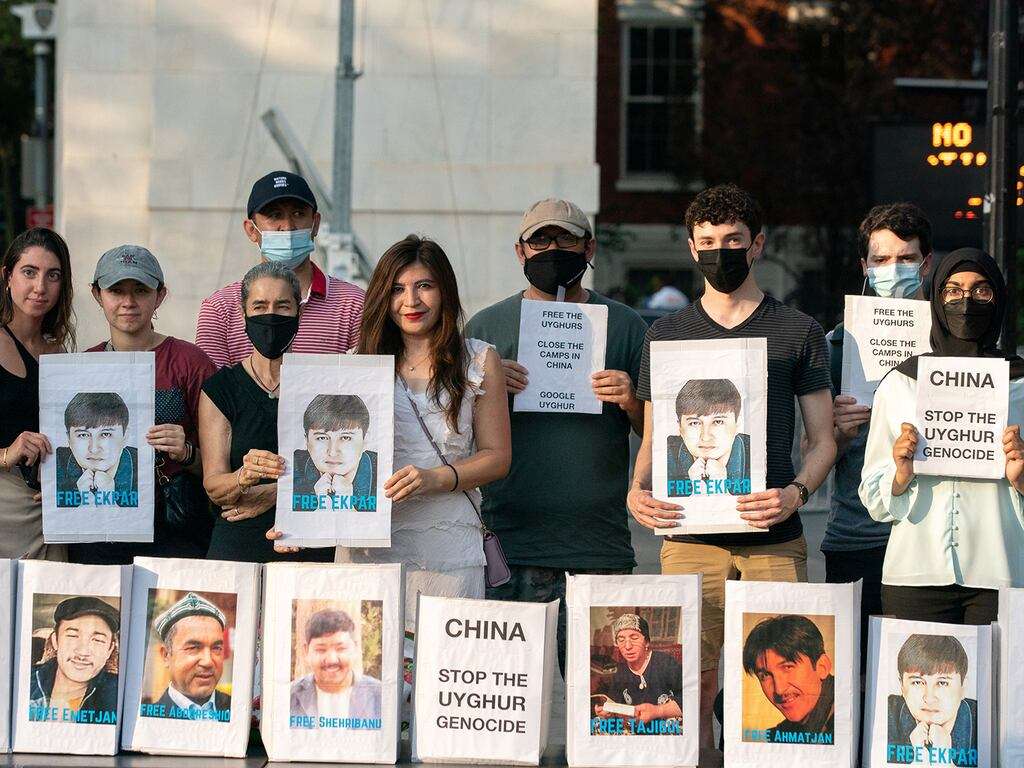
Share this post. Bring Ekpar Asat’s name to the attention of those who have not seen it before. When tagging your political representatives, use the hashtags #FreeEkparAsat, #DisabilityJustice, and #CripJustice.
Contact your representatives. Call or write to your representatives of Congress and ask them to publicly urge China for Ekpar’s release. Bipartisan advocacy has already occurred at the Senate level. It should be louder and more sustained.
Sign Amnesty International’s petition for his urgent release at It is delivered straight to the Xinjiang Prison Bureau’s leadership.
Please support the groups doing this work . The Raoul Wallenberg Centre for Human Rights, Amnesty International, and the Tom Lantos Human Rights Commission have all worked on his case. Find them and provide immediate help.
Stay informed and keep naming names. Ekpar Asat. Ahmad Manasra. Walid Daqqah. Dr. Hussam Abu Safiya. Systems of impunity depend on public silence. Refusing that silence is not a small thing.
Sources
Help bring Ekpar home: A decade of detention and health concerns — Amnesty International
