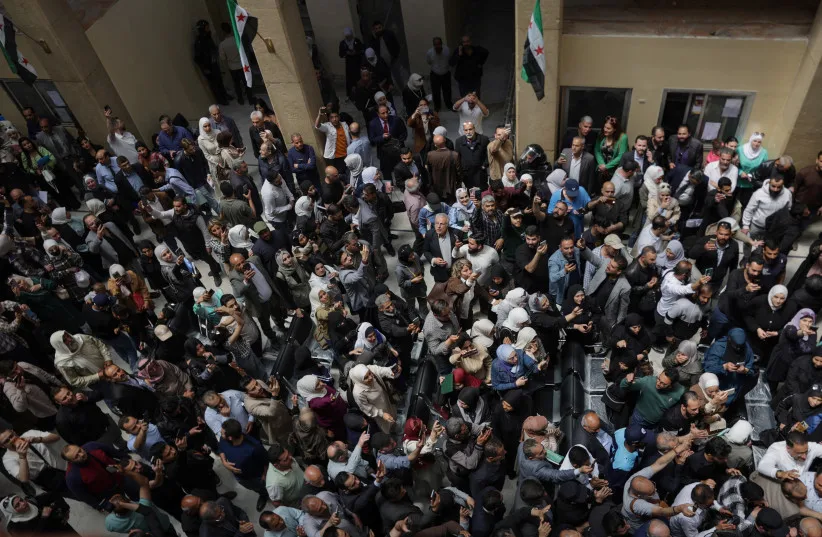
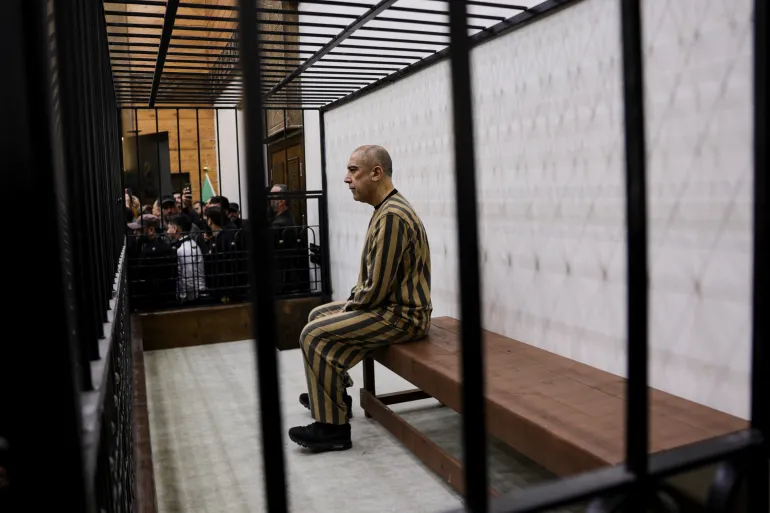
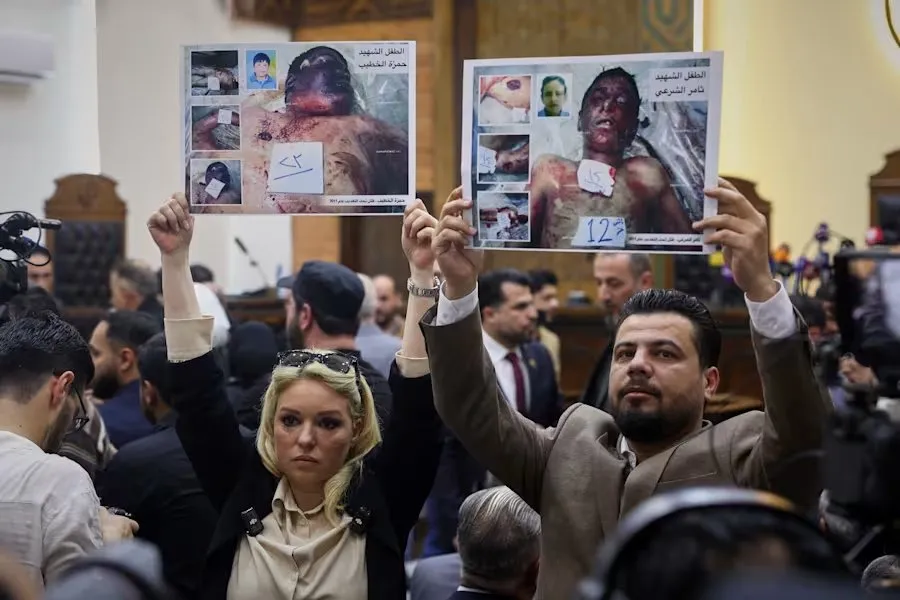
On April 26, 2026, a cage was set up in the center of Damascus’ Palace of Justice. Inside sat Atef Najib, a brigadier general, Bashar al-Assad’s cousin, and the former chief of political security in Daraa province, expressionless and clad in a brown-striped prison uniform. It was the first public trial of a top Assad government official held in Syria. Families of victims filled the courtroom. A young woman displayed a photo of Hamza al-Khatib, a 13-year-old kid who became a symbol of the Syrian revolt. A chorus echoed across the hall.
Two days before the trial began, Syrian officials detained Amjad Youssef, the key suspect in the 2013 Tadamon massacre that killed over 300 civilians. Youssef was not hard to identify. He’d documented himself doing it.
What happened in Tadamon
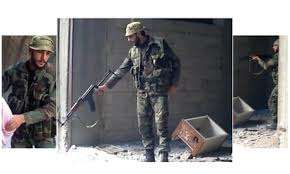
In 2013, Amjad Youssef, an intelligence officer from Assad’s Branch 227, marched around 41 unarmed citizens to the edge of a large pit. The tires had been lined up at the bottom. The victims were pushed in one at a time and at close range. Following the executions, more tires were placed on top of the victims and burned. In a confession later translated by researchers, Youssef stated: “After the executions, we piled more tires over the bodies and set them on fire to prevent the scent of decomposition from spreading throughout the area.”
The perpetrators themselves recorded the massacre in HD, with their faces visible and appeared relaxed. It was leaked and made public by The Guardian in 2022. The Tadamon massacre is believed to have killed over 300 individuals in all. According to one resident, the area smelled of burned human flesh every day.
In later interviews, Youssef admitted to killing and raping detainees. He was detained on April 24, 2026, two days before Najib’s trial began.
Tadamon massacre: hidden war crimes in Syria- Guardian News
Where Atef Najib fits
Najib’s crimes date back to the beginning of the Syrian revolt. In March 2011, students in Daraa wrote anti-regime graffiti on a school wall, with the message “Doctor, it’s your turn,” referring to Assad, a trained ophthalmologist. Najib, the province’s chief of political security, oversaw the children’s arrests and torture. Their torture sparked a nationwide uprising. He then oversaw a massive campaign of repression, arbitrary arrest, and lethal force against demonstrators in Daraa, including the murder of people gathering at the al-Omari mosque.
Bashar al-Assad, his brother Maher, and other key officials have been called as defendants in absentia in the same case. Assad escaped to Russia when his regime fell in December 2024 and will face trial in absentia. The next hearing is planned for May 10, 2026.
This is a disability justice story
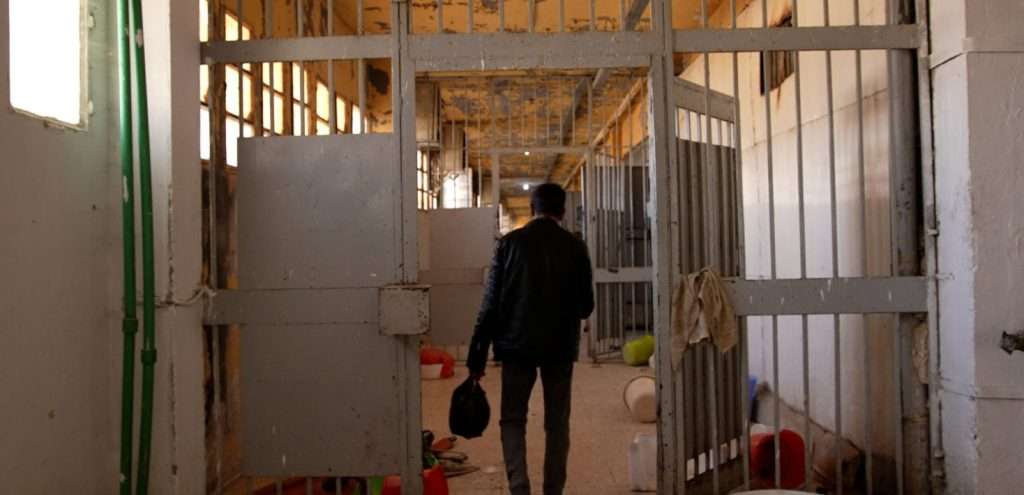
At CripJustice, we recognize that torture in detention is more than just a human rights violation. It is the purposeful and systematic manufacture of impairment. Najib’s security force and Youssef’s death squads did more than simply slaughter Syrian bodies. It was breaking. The torture tactics recorded across Assad’s detention network, such as electric shocks, stress positions, sustained beatings, starvation , sleep deprivation, solitary confinement, and sexual abuse, cause more than just pain. They inflict long-term neurological damage, chronic pain, PTSD, traumatic brain injury, and irreversible physical injuries. Survivors of Tadamon, Branch 251, Sednaya, and hundreds of other institutions in Syria are now suffering from these injuries.
We covered Sednaya Prison in a recent post. When Assad’s government collapsed in December 2024, around 4,300 individuals walked out of the facility. They walked away with just the bodies and minds they had left after years of systematic abuse. As Amnesty International revealed in June 2025, survivors of Sednaya and other detention centers face terrible physical and mental health impacts due to a fundamental lack of support. When the US foreign aid freeze went into effect in early 2025, the groups working to assist them lost 60% of their financing. The disabilities created in these facilities are real, documented, and largely unsupported.
Hamza al-Khatib, whose picture was displayed in a Damascus courtroom, was 13 years old when Syrian security forces arrested him during the early Daraa protests. His body was given to his family some weeks later, with traces of extreme torture such as burns, fractured bones, and mutilation. He was a child. The torture that murdered him followed the same logic, tactics, and systematic targeting of the body that CripJustice has identified in every case we have covered, from Kalief Browder in a New York jail to Ahmad Manasra in an Israeli prison to the thousands of Syrians who never made it out.
What the trial can and cannot do
According to the Syrian Network for Human Rights, Syria’s criminal law does not have separate legal categories for war crimes and crimes against humanity. The charges against Najib are likely to be classified as ordinary criminal offenses like as murder, torture, and abuse of authority, rather than crimes against humanity under international law. This implies that even if he is convicted, the verdict will be legally insufficient to represent the systematic and pervasive character of what occurred. A single domestic criminal prosecution will not capture the whole chain of command, including the institutional framework that enabled Tadamon and Sednaya.
A single domestic criminal prosecution will not capture the entire chain of command, or the institutional architecture that enabled Sednaya, Tadamon, and Branch 251. One conviction does not fix what was damaged. It does not support the rehabilitation of survivors. It fails to account for those who have disappeared. It doesn’t call for Assad, who is sitting in Moscow, to confront the people whose families he has destroyed.
But it’s something. One mother told Middle East Eye, “This is the most beautiful day of my life.” God has placed him in a cage. We hope justice prevails.”
What accountability actually requires
Justice for the victims of Assad’s detention system is a disability justice demand. It is required to provide not just criminal prosecution but also supported, long-term rehabilitation for persons suffering from disability caused by torture. It requires an impartial inquiry of the whole chain of command. It demands a transitional justice system that recognizes crimes against humanity for what they are. It is necessary for the international community to lift the funding freeze that devastated victim rehabilitation groups at a time when survivors needed them the most.
The cage in the Damascus courthouse represents a start. The victims whose bodies were broken within Syria’s jail facilities deserve more than just a start. The next hearing date is May 10. We’ll be watching.
Sources
Syria puts first Assad-era official on trial in Damascus — Al Jazeera, April 26, 2026
Syria begins trial of first Assad-era official in Damascus — Middle East Eye, April 26, 2026