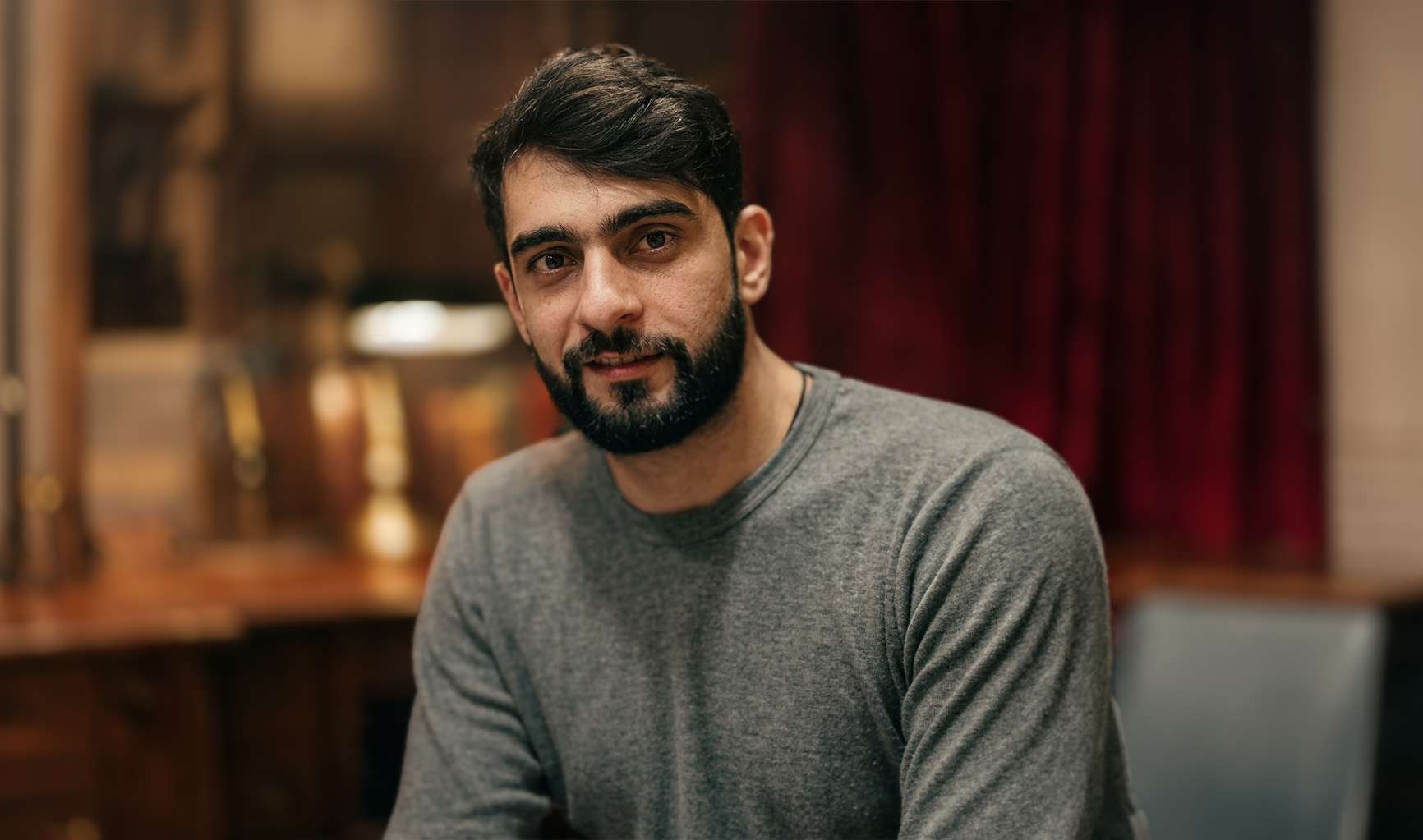
Sayed Mohammed Al- Mousawi went out for suhoor, the pre-dawn meal eaten during Ramadan, with friends on the evening of March 19, 2026. He was 32 years old, recently released from prison after serving over a decade on charges his family disputed, and by all accounts was focused on building a new life. He was saving money to start a business.
He never came home.
Al Mousawi and his friends were detained at a checkpoint by Bahraini authorities and subjected to enforced disappearance, leaving their families in the dark about their whereabouts or fate. His family got a call eight days later telling them to pick up his body from the Bahrain Defense Force Hospital
His body was returned covered with bruises and slash marks, including on the soles of his feet, His death certificate listed the cause as a heart attack. His family said he had no preexisting condition. The injuries were consistent with blunt force trauma, according to Ahmed Banasr, a forensic specialist with the Physicians for Human Rights organization in New York. Wounds on the soles of his feet rule out other explanations, such as a fight or fall. “The findings are highly consistent with alleged torture,” he said. The Bahraini Interior Ministry called the images of his injuries “inaccurate and misleading.” No independent investigation has been announced.
Torture as the production of disability
CripJustice works at the intersection of disability and incarceration in all of its forms, including the use of torture and detention by governments operating without consequence. Al Mousawi’s experience is more than just a human rights violation in the abstract. It is the intentional production of catastrophic physical harm to a person whom a state has held captive and claimed responsibility for. His injuries, which include severe bruises around his eyes, lacerations on one leg, bleeding injuries to his toes, and haematomas across his arms, legs, feet, and back, would have rendered him permanently disabled if he had survived. The documentation of these injuries by Euro-med Monitor supports serious suspicions that he was subjected to torture, violent physical assault, and degrading treatment before his death.
Torture in custody not only kills. It breaks bones, deafens, and blinds. It causes PTSD, psychosis, chronic pain, and traumatic brain injury. It produces disability deliberately, and then the state denies what it has done. This is why CripJustice names torture as a disability issue, not just a human rights issue. The two are not separate.
War as cover for a crackdown
The death of Al-Mousawi was not an isolated incident. Israel and the US have launched thousands of attacks throughout Iran since February 28, 2026. The attacks in Bahrain resulted in at least 2 people killed and 46 injured. Dozens of people were detained by Bahraini authorities for taking part in nonviolent peaceful demonstrations, mourning the death of Ayatollah Khamenei, or posting footage of the attacks on social media.
According to the Al Amal Center for Human Rights and Justice and the Bahrain Institute for Rights and Democracy in Britain, authorities have detained over 200 persons since the war started, most of whom were Shia. Some are charged with treason, which was punishable by either the death penalty or a life sentence.
This is the pattern that disability justice requires us to name clearly: the use of war and national security as a justification for mass arbitrary incarceration of a marginalized community, followed by torture, disability, death, and institutional denial. CripJustice recognizes this pattern because we see it in every context we work in, from psychiatric facilities that place people in solitary confinement for “their own safety” to ICE detention centers that deny HIV medication until a person dies, to jails that return bodies to families and call it a heart attack. The playbook often doesn’t change. Only geography does.
The Body as Evidence
At CripJustice, we pay attention to what happens to bodies in custody. Detention systems claim to protect public safety. What they actually do, across borders and political systems, is subject vulnerable individuals to conditions that cause injury, disability, and death. Al-Mousawi had already served more than a decade in prison before being released in 2024. That history matters. People who have been incarcerated face long-term physical and psychological consequences. Reincarceration, particularly in the context of enforced disappearance and torture, compounds harm that is already chronic.
A government that tortures people and then calls the photographic evidence “misleading” is not an anomaly. It is a system operating exactly as designed.
Ebtisam al-Saegh, a prominent Bahraini human rights activist who previously accused Bahrain’s security services of torturing and sexually assaulting her, said after Al-Mousawi’s death: “”The state of his body reminds me of many men whose bodies emerged from security custody in the same condition. They were effectively sentenced to death inside interrogation rooms; their bodies told the story.”
She would know. Sexual violence in detention is a form of torture that produces lasting psychological damage. For decades, the UN Special Rapporteur on Torture has recognized this. Bahrain has been documented engaging in it for decades. The international community has issued statements.
The U.S. connection
This can’t be discussed without mentioning the obvious. Bahrain is home to the US Navy’s 5th Fleet, which hosts more than 9,000 American troops. The US has long been aware of Bahrain’s detention practices, including torture of political prisoners and targeting of its Shia majority. It has constantly prioritized military presence over accountability. Human Rights Watch has stated that Bahraini authorities are “using the cover of war to justify further violations against the population of Bahrain, including migrant workers.”
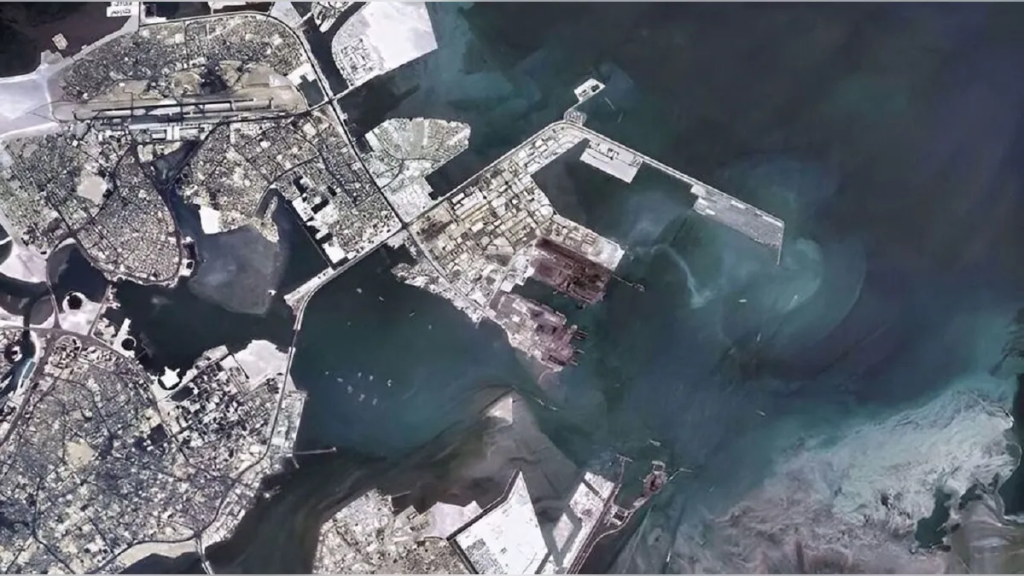
CripJustice’s work recognizes that disability justice cannot be separated from U.S. foreign policy. The same country that incarcerates and imprisons the most diabled people than any other nation also funds, arms, and provides military infrastructure that tortures its citizens. American forces are stationed on an island where a man was arrested at a checkpoint during Ramadan, abducted, tortured to death, and returned to his family in pieces. This isn’t incidental to US foreign policy. It is part of the infrastructure that enables it.
What Al-Mousawi’s death means
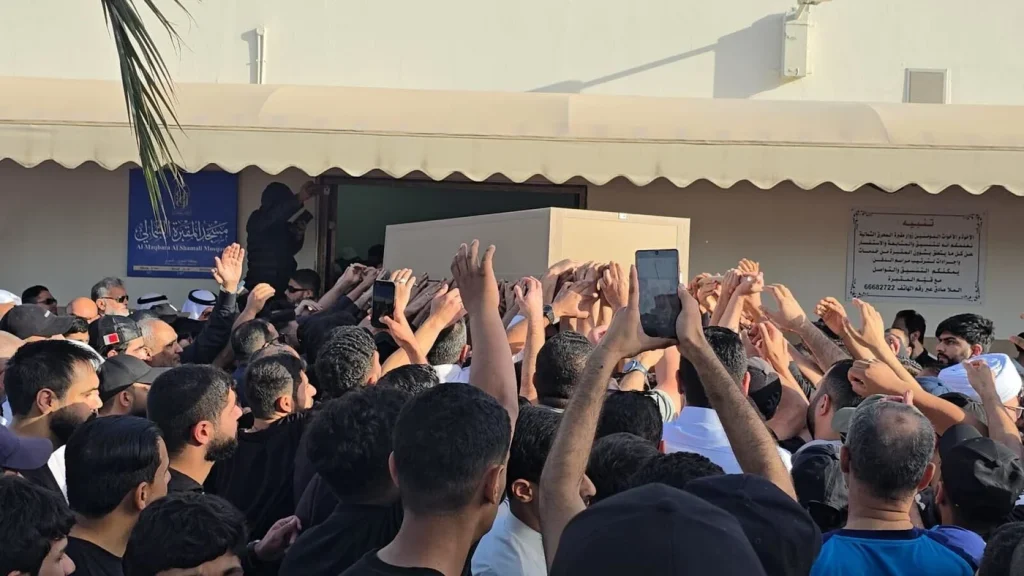
One mourner at his funeral captured what many felt: “At any time, in any place, at a checkpoint, you can be arrested. Your home can be raided. You can be detained for any reason, disappear completely, and then suddenly your family finds your lifeless body. This is frightening and terrifying.”
Another mourner put it more directly: “The message is clear: the government warns and cautions, through the martyr, against protesting, showing solidarity, or speaking up. The government wants a silent people who see nothing, hear nothing, and say nothing.”
At CripJustice, we refuse to be silent. Sayed Mohammed Al-Mousawi did not pose a security threat. He was a 32-year-old man who had already lost nearly a decade of his life in Bahrain’s prison system and was trying to rebuild his life. His death is the result of a state that torutes peoples for dissent, disappears people for posting on social media, and has the full support and backing of the US administration.
Torture is a disability justice issue since it is more than a political crime. It is the deliberate infliction of injury on a captive body, resulting in fractured bones, nerve damage, traumatic brain injury, chronic pain, PTSD, and psychosis. If Al-Mousawi had survived what done to him, he would have emerged from custody permanently disabled. He did not survive. However, the thousands of people who are currently held in Baahrain’s prison may, and they will live with those disabilities for the rest of their lives, with no accountability, rehabilitation, or support. CripJustice exists to highlight the connection between state violence, incarceration, and the bodies that carry the consequences of both. Al-Mousawi’s body bore that cost. Naming it is the minimum we owe him and to all those who have been tortured into silence and the thousands still inside.
Sources
Bahrain: Sweeping Arrests Amid Conflict — Human Rights Watch, March 19, 2026
Bahrain cracks down on Shia dissent as Iran war tests kingdom — Al-Monitor, March 2026