
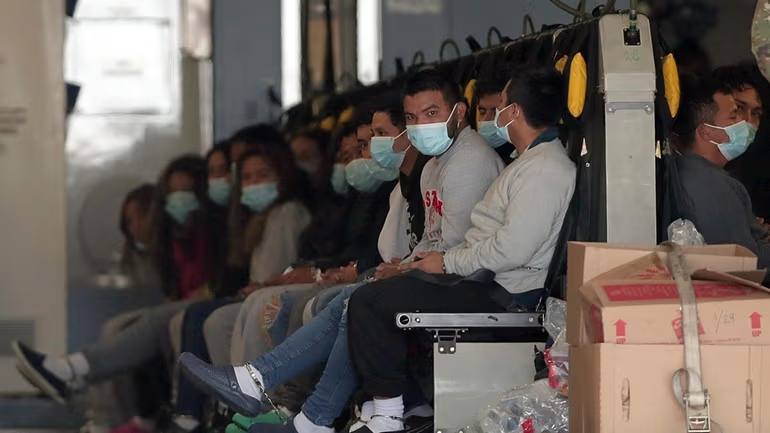
In May 2025, eight men in ICE custody boarded a flight in Texas. Officials informed them that they were being moved to another ICE facility in Louisiana. Many hours later, the plane arrived in Djibouti. For weeks, the prisoners were imprisoned in shipping containers with their legs shackled. They were subsequently expelled to South Sudan, a country on the edge of civil war with which the majority of them had no connection. They hadn’t been told where they were headed. They had no way to oppose the deportation in court. They just disappeared into what one law professor described as “a global gulag.”

This is the policy the Trump administration calls third-country deportations. At CripJustice, we call it what it is: the use of human bodies as bargaining chips in a minerals extraction deal.
What is actually happening
Since February 2025, the Trump administration has been systematically deporting individuals to countries where they have never resided, countries that have agreed to accept them in exchange for money, trade deals, and political favors from the United States. The government has proposed agreements with more than a quarter of the world’s countries to accept these so-called third-country nationals. The negotiations are conducted in secret. The State Department and ICE would not discuss them publicly.
So far, African nations engaged include South Sudan, Rwanda, Ghana, Eswatini, Uganda, Equatorial Guinea, Liberia, Sierra Leone, Mali, and the Democratic Republic of the Congo. Many of these countries have no common geography or culture. It’s minerals.
Rwanda got $7.5 million from the United States government to accept deportees. Equatorial Guinea received an additional $7.5 million from the State Department’s Migration and Refugee Assistance Account. Uganda agreed to accept deportees from other African countries. A Senate Foreign Relations Committee report published in February 2026 discovered that in some cases, the administration spent more than one million dollars per person on these deportation arrangements, with the receiving governments having well-documented records of corruption, human rights abuses, and human trafficking.
The minerals connection
‘
Trump held a “Africa summit” at the White House in 2025, gathering five African leaders around a conference table. He told them they had “very valuable land, great minerals, great oil deposits, and wonderful people” and then announced they were making progress on third-country agreements. The sequencing was not subtle.
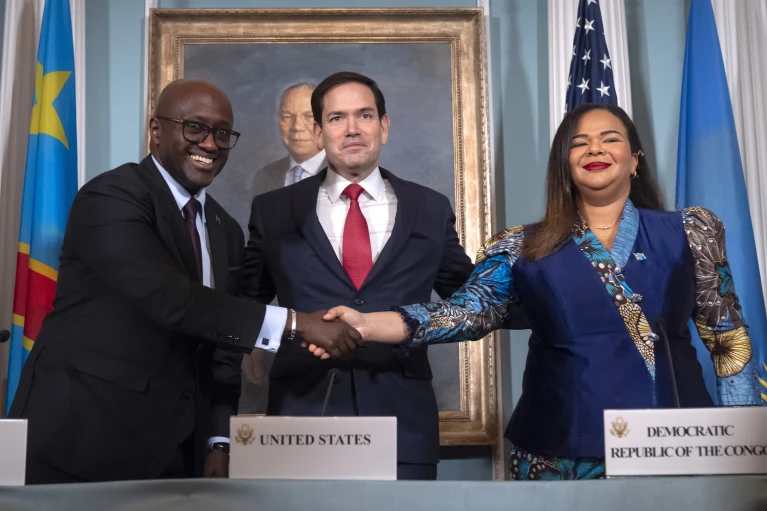
In June 2025, Trump gathered the foreign ministers of the Democratic Republic of the Congo and Rwanda at the White House to sign a US-brokered peace deal, declaring: “Today, the violence and destruction comes to an end, and the entire region begins a new chapter of hope and opportunity, harmony, prosperity, and peace.” He was candid about what the US was getting in return: “We’re getting a lot of mineral rights from Congo as part of it.” The deal was tied to American companies gaining preferential access to Congolese vital minerals through a Strategic Asset Reserve.
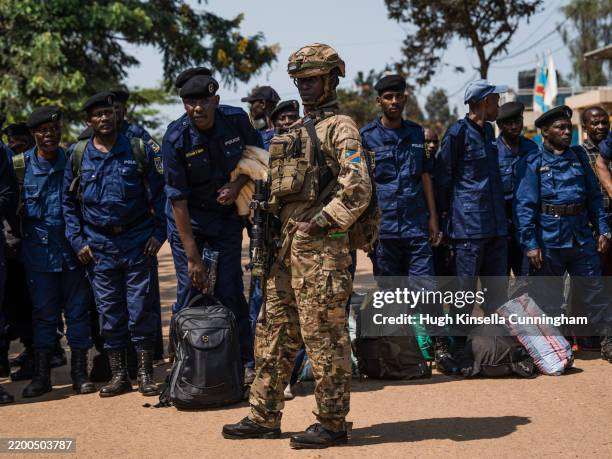
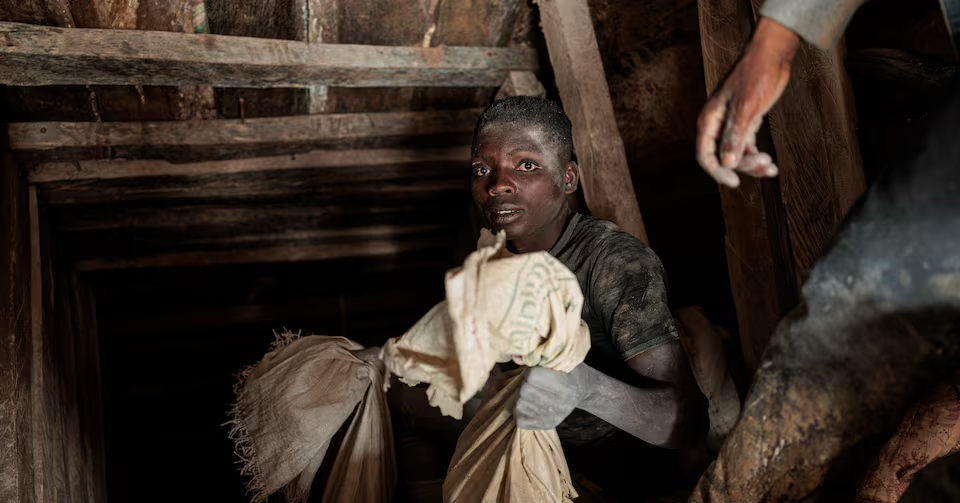
The Democratic Republic of the Congo (DRC) is the world’s largest producer of tantalum and cobalt, with huge deposits of copper, tin, tungsten and gold. These are the minerals used to power cellphones, electric cars, and batteries, and they are at the heart of the US-China technological competition. Meanwhile, Rwanda had invaded eastern DRC with up to 12,000 troops and command and control of the M23 rebel organization, which controls a large number of mines. Approximately 8 million individuals have been displaced. Thousands have been killed. The M23 forces may have committed war crimes. And Rwanda, which is supporting a rebel group accused of war crimes in the DRC, is receiving US funding to accept ICE deportees from the other side of the world.
Trump-linked lobbying firms have profited from the mining agreements. On the same day Trump issued an executive order halting foreign aid, the DRC signed contracts for millions of dollars with corporations such as Ballard Partners, which is controlled by a major Trump campaign supporter. Human beings being shipped across the world in shackles are the currency in a transaction that results in American firms having preferential access to cobalt mines.
What this does to bodies
ICE deported people to Africa using military jets with their transponders switched off, making it practically difficult to follow the flights using public flight databases. One flight transported 14 Nigerian and Gambian people to a detention camp in Ghana. Another secretly arrived in Liberia, Sierra Leone, and Mali. Passengers on one route were shackled for more than 50 hours in handcuffs and leg irons attached to chains around their waists.
In Eswatini, five deportees sent there by the US were placed in solitary confinement in undisclosed prisons. The African Commission on Human and Peoples’ Rights stated that these deportees were being taken to a “disposal zone” for arbitrary expulsions, and it was concerned that the agreements violated the African Charter on Human and Peoples. In October 2025, the UN High Commissioner for Refugees expressed concern about the legitimacy of existing deportation operations.
A federal court ruling in February 2026 determined that the policy of deporting individuals to third nations was illegal, breaking federal immigration law and migrants’ due process rights. The administration said it would appeal.
This is a disability justice story
CripJustice recognizes that carceral systems cause disabilities through deliberate physical and psychological suffering. What is being done to people in these third-country deportations is exactly that.
Solitary confinement in Eswatini prisons. Fifty hours in chains on a military jet. Detention in cargo containers in Djibouti. Deportation to nations in the midst of civil conflict or with recorded cases of torture and arbitrary imprisonment. These are not unintended outcomes of a policy established for other purposes. They are the conditions under which people are being held and transferred as part of a transaction whose real purpose is mineral extraction.
The connection to our existing coverage is direct. We previously wrote on Fouad Saeed Abdulkadir, an imam who died in ICE custody after being denied medical treatment. We wrote about Chaofeng Ge, who died in a shower stall five days after being admitted because no one could communicate with him in his language. We wrote about Nhon Ngoc Nguyen, a dementia patient who was transferred between hospitals and detention until his death. The individuals being shackled and shipped to foreign nations are the same population that the system has decided to use and discard.
CripJustice’s framework explicitly includes anti-capitalism as a connected issue. What is going on here is undeniable capitalism: human bodies are being exploited as currency to buy access to mineral riches, with the impairment, pain, and death that result from the process accepted as collateral. Congolese miners operating in cobalt mines owned by rebel groups sponsored by a country that receives US dollars for accepting ICE deportees are part of the same system. The individual chained for 50 hours aboard a military plane with its transponders switched off is part of the same system. The disability and death caused at every node of the system need to be named.
Justice Sotomayor wrote in dissent after the Supreme Court authorized these deportations: “Apparently, the Court finds the idea that thousands will suffer violence in far-flung locales more palatable than the remote possibility that a District Court exceeded its remedial powers.” That use of discretion is as incomprehensible as it is inexcusable.”
We agree
Sources
Third Country Deportations Tracker — Refugees International
Eswatini: Outrage over arrival of foreign US deportees in tiny African nation — CNN, July 18, 2025
Deportation in the second Trump administration — Wikipedia
How Trump Is Reshaping Immigration Enforcement — Council on Foreign Relations, February 27, 2026
Trump’s commercial diplomacy runs into violent reality — Responsible Statecraft, March 13, 2026
Trump-linked firms make millions from aid-deprived nations — Global Witness
Trump heralds US-brokered peace deal between DRC, Rwanda — ABC News, June 27, 2025
Congo and Rwanda sign a US-mediated peace deal — NBC News, June 28, 2025
