

Note: This story is still unfolding as of today
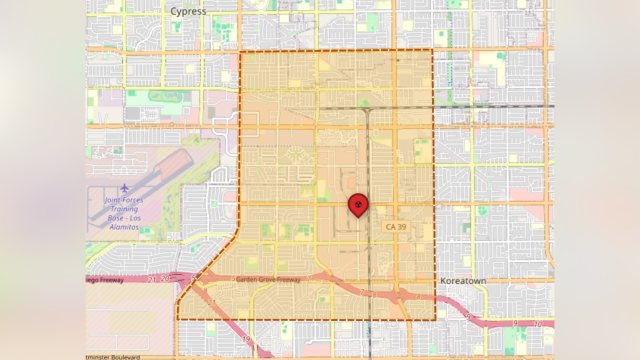
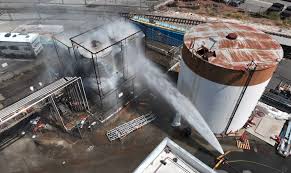
As of this morning, May 23, 2026, around 50,000 people of Garden Grove, Cypress, Stanton, Anaheim, Buena Park, and Westminster were still under mandatory evacuation orders. Governor Gavin Newsom proclaimed a state of emergency in Orange County today. The problem is a 34,000-gallon methyl methacrylate tank at a GKN Aerospace facility on Western Avenue in Garden Grove that began to overheat on Thursday and cannot be stabilized. Orange County Fire Authority Division Chief Craig Covey has stated unequivocally: “This thing is going to fail, and we don’t know when.” The two remaining choices are a leak of thousands of gallons of dangerous combustible liquid into nearby communities or a catastrophic explosion involving many tanks.
This is a breaking emergency. It is also a story that was decades in the making.
Who lives here
Garden Grove is among the most diverse cities in Orange County. It is home to one of the largest Vietnamese American populations in the United States, sometimes known as Little Saigon, and has a substantial Latino community. The typical household income in Garden Grove is much lower than the Orange County average. These are working-class neighborhoods, immigrant families, renters, and people who lack the financial resources to relocate for an indefinite period of time, as well as the political power to prevent an aerospace company from locating a 34,000-gallon tank of volatile toxic chemicals in the heart of their community.
Stanton, Westminster, and Garden Grove are among Orange County’s lowest-income cities. These are not the communities where Disneyland executives reside. Disneyland, located five miles away, told CNN that it is closely watching the situation and is prioritizing visitor safety. It remains open.
This is what environmental justice means
According to Earthjustice, African Americans are 75% more likely than the general population to reside near industrial chemical plants, while Latinos are 60% more likely. According to the EPA’s own Risk Management Program statistics, nearly 12,000 high-risk chemical plants are disproportionately placed near communities of color and low-income neighborhoods nationwide. This is not arbitrary. Industrial zoning choices reflect and exacerbate current trends of racial and economic segregation. Dangerous facilities are built where political resistance is weak and land is inexpensive. This means that communities of color and low-income areas bear the danger, while richer and whiter communities do not.
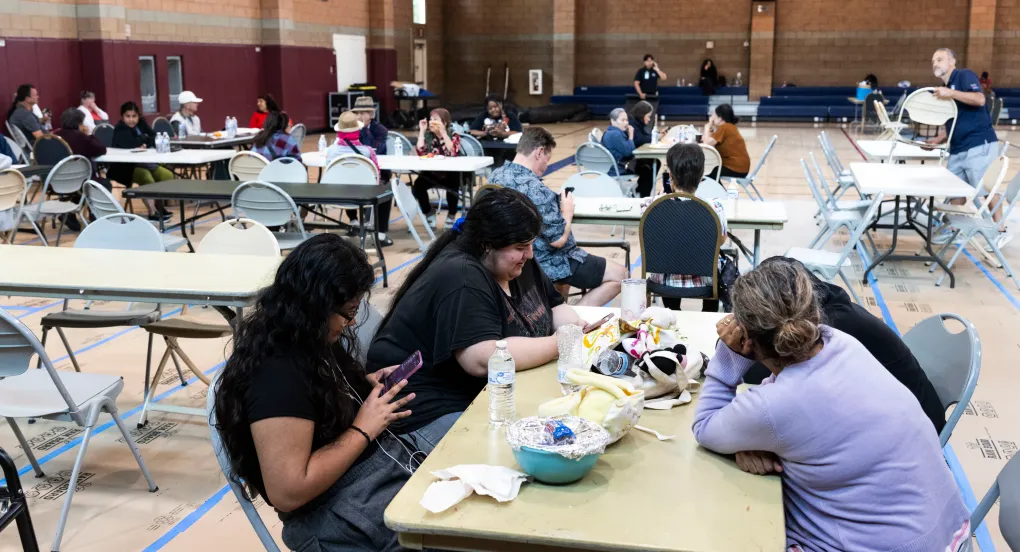
GKN Aerospace employs 16,000 workers across 32 manufacturing facilities in 12 countries, with its headquarters in Birmingham, England. The people sleeping on cots at Fountain Valley’s Freedom Hall evacuation shelter are not GKN executives. They are the neighbors of GKN’s facility, who had no say in whether the facility would be built next to their homes, weren’t warned about the risks of storing 34,000 gallons of volatile toxic chemicals in their neighborhood, and are now displaced indefinitely due to a valve failure.
This is a disability justice story
Evacuation is not readily available. For people with mobility issues, leaving quickly is not as straightforward as getting into a car. For patients who rely on home medical equipment, oxygen tanks, dialysis machines, refrigerated pharmaceuticals, or 24-hour care, forced displacement is a medical emergency in and of itself. For persons suffering from dementia or serious mental disease, the unexpected disturbance of routine and surroundings causes significant psychological harm. Evacuation without a support network for elderly persons living alone can be life-threatening, regardless of the chemical.
For those who already have respiratory conditions, the chemical itself presents serious risks. The Orange County health officer claims that methyl methacrylate vapor causes respiratory irritation, burning eyes, nausea, and headaches. Exposure to such fumes is more than just uncomfortable for those who have asthma, COPD, or other respiratory disorders. It is hazardous. Many communities of color and low-income areas are already disproportionately affected by chemical plants, and they frequently have higher rates of hospitalization and mortality from various health issues. The communities at most danger from this leak are the same ones that have already been absorbing ambient pollution from decades of industrial activity in western Orange County.
A fourth evacuation shelter was opened this morning because the others reached capacity. There is no public information available about whether those shelters are accessible to wheelchair users, whether they can accommodate people with medical equipment, or whether they have mental health support staff on site.
What accountability requires
Congressman Derek Tran, who represents Garden Grove, has asked GKN Aerospace to “take full responsibility for the panic and disruption that tens of thousands of residents are currently experiencing.” This is a start. Full accountability includes compensating every displaced resident, even those who lose income because they are unable to return to work. It involves a thorough independent study into how a defective valve on a tank storing this much dangerous material got to this stage. It involves a reckoning with the zoning and permitting choices that brought this plant to this community in the first place.
CripJustice understands that environmental justice and disability justice as inseparable. The decision to locate dangerous industrial facilities in communities of color and low-income areas is a decision about whose bodies are valued and whose are not. The decision to keep Disneyland open five miles from a plant that might explode while 50,000 people sleep in emergency shelters is a choice between whose comfort is important and whose is not. The failure to openly address whether evacuation shelters are accessible to handicapped individuals determines who is fully involved in the emergency response.
This is still unfolding. We will continue to monitor it.
Sources
Garden Grove chemical tank emergency — ABC7 Los Angeles, May 23, 2026
Garden Grove chemical leak: Tank’s internal temperature increasing — NBC Los Angeles, May 23, 2026
Garden Grove Demographics — California Demographics, 2026
Garden Grove, California Population 2026 — World Population Review, 2026
Garden Grove Census Data — Orange County Census Atlas
For Communities of Color, Chemical Safety Delay Is Even More Deadly — Earthjustice, 2023
EPA Strengthens Chemical Disaster Safeguards — Earthjustice, March 2024
Chemical Disaster Prevention Program — EJ for All
Garden Grove chemical leak — Wikipedia, May 23, 2026
